

Lingerie Sizing in Canada: Why One Size Doesn't Fit Everyone

One size sounds convenient until the straps pull, the cups sit in the wrong place or the bodysuit is simply too short. In lingerie, a one-size label is not an objective body measurement.
It is a manufacturer’s suggested fit range for one particular garment—and that range can be dramatically different between two styles sitting next to each other.
At a glance: quick comparison
Compare | Stretch one size | Structured / plus fit |
|---|---|---|
Fit guide | Brand's body range | Brand's exact size chart |
Most important | Recovery and torso fit | Bust, closures, proportions |
Adjustability | Depends on ties and straps | Depends on garment design |
Shopping risk | Overtrusting stretch | Assuming labels are universal |
Best practice | Measure bust, waist, hips | Measure and check construction |
Swipe or scroll the comparison table horizontally if you're reading on a narrow screen. The detailed sections below explain where each option works best.
Why one size is not a universal measurement
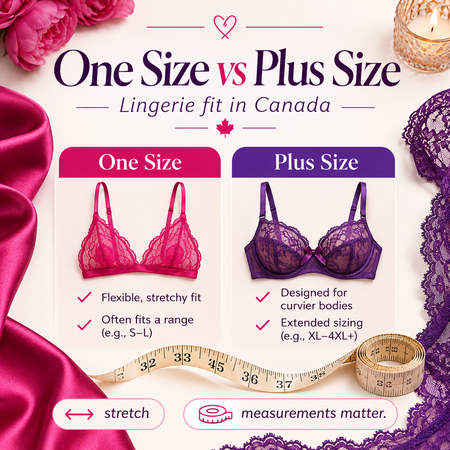
Stretch mesh, fishnet and soft lace can accommodate different shapes because the fabric stretches. But elastic does not erase the need for proportion. A teddy has to fit across bust, waist, hips and torso length at the same time.
A babydoll may have more room below the bust but less flexibility in the band. A stretchy bodystocking may fit a broader range than a structured bustier.
Canadian shoppers may see labels like OS, O/S, OSFM, one size, queen size and one size plus. Those terms are not regulated fit standards. Treat them as starting points and look up the specific brand’s size chart for the exact product before buying.
From behind our Edmonton counter: one size is not fitting everyone
At Mommys Toy Shop, we have recently noticed some one-size garments fitting smaller than their packaging might lead shoppers to expect. Two people with the same dress size can have very different torso lengths, waist measurements and thigh circumferences. Coquette's standard one-size styles can be a useful starting point for shoppers in the small-to-large range, but check the individual garment chart rather than assume a universal fit.
Take three measurements before you shop
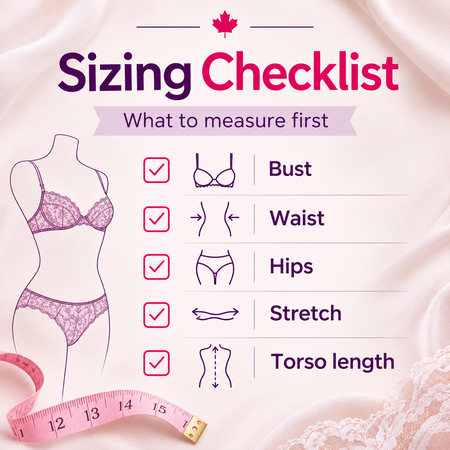
Measure the fullest part of your bust while wearing the undergarment you expect to wear with the piece, if any. Measure your natural waist at its narrowest comfortable point, and your hips at the fullest part.
Keep the measuring tape level, snug but not tight. Record the measurements in centimetres or inches and compare them against the product chart using the same units.
For fitted teddies and bodysuits, torso length can be just as important. Shoulder-to-crotch proportions affect whether straps pull and whether the garment sits comfortably. For bra-like tops, the band, cup construction and adjustability matter more than a generic numerical clothing size.
A garment’s cut matters as much as its size label
A lace chemise with a loose skirt tolerates different hip measurements better than a high-cut teddy with little vertical stretch. A corset-style piece with boning or hook-and-eye fasteners needs a closer measurement match.
Garments with adjustable shoulder straps, ties, closures or garters give you more room to personalize fit than pieces with a fixed neckline and no adjustments.
Fabric descriptions can also mislead. 'Stretch lace' does not tell you how far the material stretches, how much it recovers or whether decorative seams limit movement. The percentage of elastane may be useful, but it is not a replacement for a brand-specific chart.
Standard sizing versus plus sizing
Plus sizing is not simply the same garment made wider everywhere. Good fit also considers strap length, bust proportions, coverage and the placement of decorative panels.
If you fall between the top of a standard range and the bottom of a plus range, compare the garment construction and your dominant measurements rather than automatically choosing the smaller label.
Size inclusivity should be more than a category filter. A shopper should be able to inspect a measurement chart, see whether the product has adjustable elements and understand the garment’s intended fit. If a chart is missing, request the brand’s actual dimensions instead of trusting a model photograph.
Our bestselling lingerie brands
Coquette is one of our bestselling brands because of its broad range of lingerie, stockings, garters, outfits and costumes. In our experience it also offers our strongest plus-size assortment. Music Legs is another favourite for its extensive hosiery selection. We provide size charts for every brand we carry, which helps prevent sizing complaints. Brands differ in sizing.
Compare the Coquette Think Pink Babydoll in OS with the Coquette Temperature’s Rising Babydoll in OS/XL. Check each garment's own chart.
How to choose when your measurements cross size ranges
Prioritize the least forgiving part of the garment. For a structured bustier, that may be the bust or underbust. For a fitted bodysuit, the torso length may determine comfort.
For a loose babydoll, bust or band measurement may be the main constraint. If a garment uses ties or stretch panels, those can provide flexibility, but they are not a guarantee of fit.
Read whether measurements refer to the wearer’s body or the garment itself. An unstretched garment measurement can be smaller than the recommended body measurement; that does not automatically make the size wrong.
Conversely, unusually high stretch claims do not guarantee the fabric will remain opaque or comfortable at the far end of the range.
Will these stockings fit my thighs?
That is one of the most common questions we hear in store. Measure where the stocking band will sit and check the manufacturer’s size guidance. A stretchy leg does not guarantee a comfortable top band.
Compare Music Legs 4150 thigh highs and the 4150Q plus-size version. For pantyhose, consider the Music Legs 333Q Plus Size Control Top Sheer Pantyhose.
What online photos cannot tell you
A product photo generally shows one body shape, one styling choice and possibly clips or adjustments used for photography. It will not reliably show how the same piece sits on a longer torso, a fuller bust or narrower shoulders.
Use photos for colour and design, measurements for purchase decisions, and customer service for questions the chart cannot answer.
Styles we suggest when fit is uncertain
Babydolls often provide a forgiving fit through the waist and hips. Stretch bodystockings can accommodate different shapes, but torso length and leg openings still matter. Rompers and three-piece sets are also styles we recommend comparing; adjustable components can help, but every piece must fit.
The Coquette Kink Queen Bodysuit illustrates why checking torso length matters for fitted rompers.
A smarter Edmonton lingerie shopping checklist
Before checkout, check the exact brand chart, bust/waist/hip range, torso length where relevant, stretch and closure type, and the store's return rules for intimate apparel.
If you are buying as a gift and cannot get exact measurements, adjustable designs are usually more forgiving than highly structured pieces. Do not assume every lingerie item is exchangeable once opened.
Mommys Toy Shop can help you compare lingerie options and browse in person at our Edmonton adult store. For a more private fitting and shopping conversation, book a visit. We recommend choosing by the individual garment's chart, not by the words 'one size' alone.
Explore lingerie and plus-size lingerie in Edmonton
Our dedicated lingerie collection and plus-size lingerie collection are better starting points than a general products page. Compare the exact brand chart, adjustable details and garment shape. Edmonton shoppers can book a private shopping appointment to discuss measurement questions without having to guess from product photographs.
Frequently asked questions
Is one-size lingerie the same in Canada and the US?
Not necessarily. Manufacturers define their own ranges, so the brand chart matters more than the country where the item is sold.
Does stretchy lingerie fit everyone?
No. Stretch helps, but body proportions, seams, fabric recovery and torso length still determine comfort.
Should I size up for lace lingerie?
Only when the specific fit and chart support it. Structured lace and soft stretch lace behave differently; compare the garment’s least forgiving measurement first.
This guide is intended as an updated starting point for Canadian shoppers; individual product size charts should always take priority.
How to interpret a size chart without guessing
First identify whether the chart lists body measurements or flat garment measurements. Body measurements are the dimensions of the wearer the brand intends to fit.
Flat garment measurements refer to the piece lying on a surface, sometimes unstretched. Those numbers can be substantially smaller for stretch designs.
If that distinction is not clear, ask before purchasing instead of converting an unlabelled measurement into a promised fit.
Use the same unit as the chart. Round cautiously rather than assuming a measurement at the very edge of the suggested range will fit identically on every body.
A numerical dress size alone is a weak substitute for bust, waist and hip measurements because sizing conventions vary among labels.
How fabrics change the fit
Power mesh, stretch lace, jersey and fishnet may move very differently despite all being described as stretchy. Some have good recovery after extension; others can lose shape or become sheer under tension.
Elastic trim can dig in even when the central fabric stretches easily. Seam placement matters too, especially on pieces with cups, a fitted waist or high-cut leg openings.
A lingerie set with several adjustable straps may accommodate more shapes than a single-piece teddy with fixed length. High-waisted briefs may be forgiving through the hips but restrictive at the waistband.
A chemise can offer more room through the lower half while still requiring a correctly sized bust or underbust area.
Buying lingerie as a gift
When you cannot measure the intended wearer, avoid choosing a rigid structured piece by appearance alone. Adjustable ties, soft stretch and a forgiving silhouette may reduce fit risk, but they cannot guarantee it.
A gift card or shopping visit is often a better choice than guessing between standard and plus sizing. Review the current return policy carefully because intimate apparel often has additional hygiene restrictions.
Buying lingerie as a gift? Our practical advice is to ask for a gift receipt. Confirm the applicable return conditions first, since a gift receipt does not guarantee intimate apparel can be exchanged. Consider a gift card if measurements are unknown.
Edmonton shoppers: compare fit information before the trip
If you are shopping in Edmonton, send us the product name or screenshot and the specific size question before visiting. Staff at Mommys Toy Shop can help interpret a manufacturer's sizing information and identify which garments have adjustable features. That is more useful than promising that a one-size item 'fits everybody.' Browse our Edmonton store page or book a private visit to discuss fit in a quieter setting.
When to choose standard or plus size
Use the brand's body-measurement range and prioritize the least stretchy portion of the particular garment. Standard-versus-plus labels are not universal.
If the bust measurement falls in one range and hips in another, consider a two-piece set where separate sizes are available or a style that provides more adjustability. Do not size down simply to make the label match an expectation.
A useful checklist for every lingerie product page
A good listing should show the manufacturer's fit range, unit of measurement, fabric composition, garment style, adjustable closures, colour options and care instructions. For fitted bodysuits it should address torso length where available.
This guide explains how to read that information; it does not invent missing measurements or promise fit beyond the brand's specifications.
Care can change the garment over time
Heat, aggressive washing and rough surfaces can damage delicate fibres and elastic. Follow the label's care directions and avoid treating all lace as machine-washable.
A garment that fits perfectly on day one may lose elasticity if handled improperly. Fit longevity is another reason to check material composition rather than shopping on colour and size label alone.
Share this buying guide
Like this guide? Share it with someone comparing their options. Sharing links will work once the article is published.


